iOS Application Development – The Future: Technologies & Trends to Consider

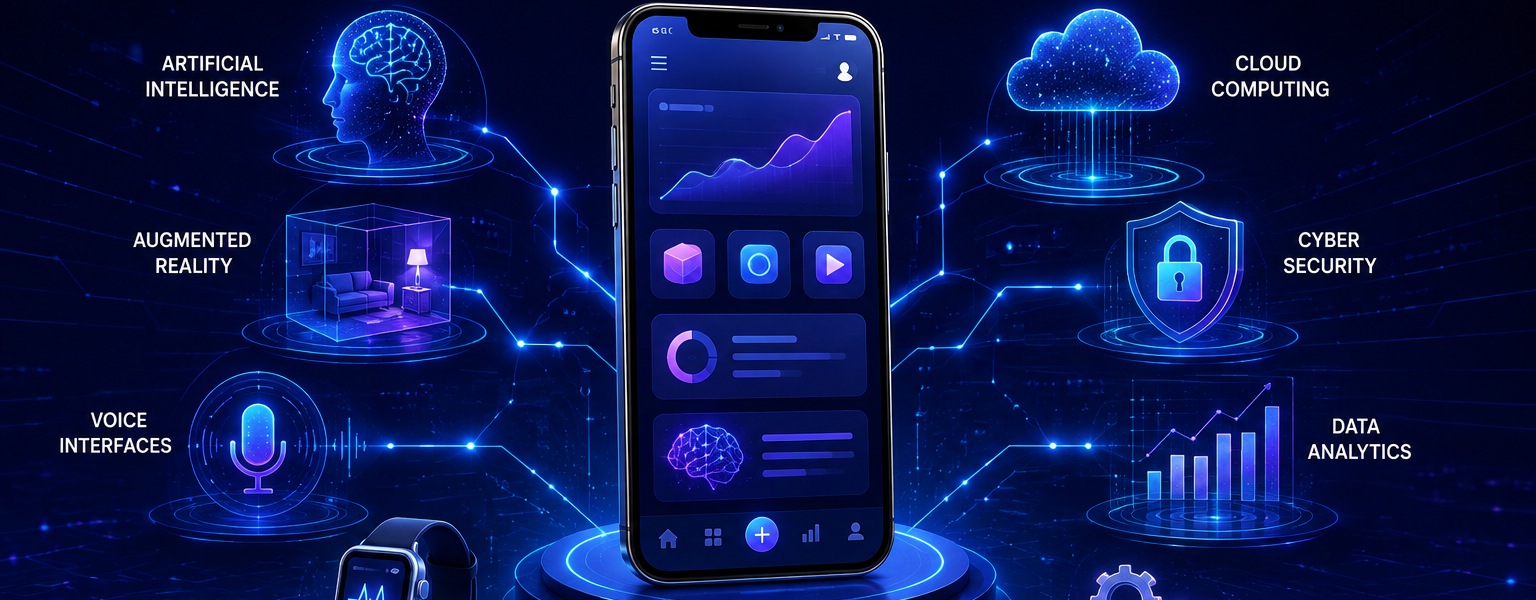
The mobile app space keeps on evolving, driven by the increasing demand for smart, fast and personal digital experience. Apple’s ecosystem is part of this evolution and provides opportunities for business in terms of reaching out to customers through mobile apps. With the advancement of such technologies as artificial intelligence, augmented reality, cloud computing and analytics, iOS application development will keep on innovating and becoming even more business-oriented in the future.
When developing or upgrading a mobile app, it is crucial for the companies to have knowledge of the emerging trends as this can be useful when making technological decisions. Current iOS application development is not about creating simple apps anymore; companies have the opportunity to develop intelligent, connected, safe and highly personalized digital experience that will bring their growth.
App Scoop assists businesses to discover modern mobile solutions by merging the app development experience and technologies with user-centered design.
The Importance of the Future of iOS App Development
As smartphones became integral parts of communication, shopping, work, education, entertainment, and services, businesses require applications that do more than just basic functionalities. The increasing expectations from customers lead to the necessity to develop advanced apps that will be efficient, secure, personalized and usable. Therefore, the growing number of organizations invests into developing iOS apps that feature high level of performance, usability, security and innovation.
Increasing Demand for More Intelligent User Experience
With time, iOS apps will use smart technologies to comprehend user needs and offer corresponding experiences. It means that apps will not only respond to user actions but also be proactive and personalized. For instance, shopping apps will recommend suitable products, financial apps will offer personalized analysis and productivity apps will assist users in organizing their daily routine.
Mobile Apps as the Platforms of Growth for Businesses
Moreover, businesses view mobile applications as strategic platforms rather than separate digital products. An application is able to unite customers with products, services, support staff, loyalty programs, payment options and many other processes of a company. Thus, developing an iOS application becomes an important investment for a company.
How Artificial Intelligence Will Revolutionize iOS Apps
Artificial intelligence is one of the major trends that will shape the future of mobile apps. AI can help applications in analyzing data, automation, understanding the user’s behavior and providing personalized experience.
Personalized User Experience Driven by AI
Personalization can greatly enhance the mobile experience. By using the AI technology, the system can analyze relevant interactions and offer personalized solutions.
For instance, an e-commerce application can personalize the products recommended to users depending on their browsing and purchasing behavior. Likewise, a content app can recommend articles and videos according to the user’s preferences.
Personalization will become an essential feature as the capabilities of AI continue improving.
AI Assistants and Conversational Capabilities
AI-driven assistants can help users to interact with applications in a natural language way. Instead of going through numerous screens, users may communicate directly.
There are many uses of the conversational AI technology for businesses, such as customer service, product discovery, booking, internal productivity and others.
AI Automation
Another area where AI may be useful is that of automation of repetitive tasks. Intelligent automation is possible through applications to provide customer service, analytics, categorization, recommendation systems, and workflow management.
This would mean less manual work for business organizations along with greater efficiency.
Augmented Reality and Spatial Computing
With the advent of augmented reality and spatial computing, opportunities for interactive mobile user experience have increased immensely. These two technologies can combine digital elements with the actual environment.
Interactive Product Experience
The retail industry can incorporate augmented reality for letting customers get a preview of the products before actually purchasing them. For instance, applications that are related to furniture can enable users to see how the furniture will look in the room.
There is also scope for exploring virtual try-ons for fashion and beauty applications.
Brand Experience
Through augmented reality, companies can launch interactive marketing campaigns, product demonstration, educational experience, and even entertainment.
In terms of the continuous development of hardware and software capabilities, iOS application development will help businesses distinguish their digital products.
Development of Cloud-based iOS Apps
Cloud technologies are gaining increasing importance in the modern age of applications. Cloud technology can enable companies to control app data, backend processes, storage, analysis, and scalable services.
Better Scalability
The cloud-based design enables an application to better accommodate the varying demand. Resources can be scaled in accordance with the number of users or transactions.
This becomes very beneficial for applications that have fluctuating traffic and rapid growth.
Seamless Information Synchronization
Information can be synchronized through cloud technologies in the devices and platforms used by the application. Users will be able to access the information consistently while companies will be able to control information through central systems.
Rapid Development and Deployment
Cloud-based tools and backend services can help developers in developing and deploying an application rapidly. All sorts of services can be integrated into the application easily.
Enhanced Mobile Security
Security will remain one of the most important priorities in the future of iOS app development. As applications handle increasing amounts of personal, financial, and business information, companies need stronger security practices.
Biometric Authentication
Biometric authentication can provide convenient and secure access to applications. Depending on the device and use case, users may authenticate themselves through supported biometric technologies.
Secure Data Protection
Developers need to protect sensitive information both during transmission and while stored. Secure authentication, encryption, access controls, and appropriate data-handling practices can reduce security risks.
Privacy-Focused Development
Privacy is becoming an increasingly important part of the mobile experience. Businesses should clearly communicate how user information is collected and used and should follow applicable privacy requirements.
A strong privacy strategy can also help build customer trust.
The Rise of Wearable and Connected Experiences
The future of mobile development is not limited to smartphones. Connected devices and wearables are creating opportunities for businesses to extend their digital experiences.
Integration With Wearables
Businesses can create experiences that connect mobile applications with supported wearable devices. Fitness companies, healthcare platforms, productivity tools, and communication services can explore opportunities in this area.
Connected Ecosystems
A connected ecosystem can allow users to interact with a service across multiple devices. For example, a user may start an activity on a smartphone and continue it through another supported device.
This approach can create a more consistent and convenient customer experience.
Voice and Natural User Interfaces
Voice interaction is another area that can influence future mobile applications. Users increasingly expect technology to understand natural language rather than requiring complicated navigation.
Voice-Based App Features
Businesses can integrate voice functionality into applications for search, navigation, customer support, accessibility, and productivity.
For example, users could search for products, request information, or perform selected actions through voice commands.
Improved Accessibility
Voice interfaces can also improve accessibility by providing alternative ways for users to interact with mobile applications.
This makes voice technology valuable not only from a convenience perspective but also from an inclusive design perspective.
Advanced Analytics and Predictive Insights
Data analytics will continue to play an important role in the future of iOS application development. Businesses can use analytics to understand how customers interact with their applications and identify opportunities for improvement.
Understanding User Behavior
Application analytics can reveal information about feature usage, customer journeys, engagement levels, and conversion patterns.
Businesses can use these insights to identify which features provide the most value and where users may be experiencing difficulties.
Predictive Analytics
Predictive technologies can help businesses anticipate future behavior based on relevant historical patterns.
For example, an application could identify customers who may be interested in a particular service or determine when certain users are most likely to engage with an application.
Low-Code and Faster Development Approaches
Traditional development remains essential for complex applications, but low-code and development automation tools are also influencing how digital products are created.
These technologies can help teams accelerate selected development tasks, prototypes, workflows, and internal applications.
However, businesses should carefully evaluate the requirements of each project before selecting a development approach. Complex applications may still require experienced iOS developers and customized engineering solutions.
Focus on App Performance
Performance will remain a critical factor in the future of mobile applications. Users have little patience for slow loading screens, crashes, unresponsive interfaces, or excessive battery consumption.
Faster Loading
Developers need to optimize application resources, network requests, data processing, and screen rendering to deliver responsive experiences.
Efficient Resource Usage
Applications should use device resources efficiently. Poorly optimized applications can negatively affect battery life, memory usage, and overall user satisfaction.
Reliable Functionality
Performance also includes application stability. Regular testing and monitoring can help identify crashes, errors, and other technical problems before they significantly affect customers.
Better Cross-Platform Experiences
While businesses may choose native iOS app development for performance and platform-specific capabilities, many organizations also need applications for multiple platforms.
Modern development strategies can help businesses maintain consistent branding and functionality across iOS, web, and other digital environments.
The right approach depends on factors such as performance requirements, budget, development timeline, target audience, and desired platform-specific features.
The Significance of People-Oriented UI/UX Design
By itself, technology is not enough to ensure success in mobile application creation. The user experience will continue to be one of the main aspects of mobile product development.
Ease of Navigation
It will become easier for users to know where they are and where they can go next through clear navigation.
Tailored Experience
Nowadays, the majority of people expect from applications the ability to cater to their needs. Tailored dashboards, suggestions, notifications, and content may turn applications into useful tools.
Consistent Design
A consistent design of applications is ensured by the use of unified layouts, fonts, visual elements, and interactivity.
When collaborating with an expert company specializing in iOS app development, companies should consider the cooperation of the design and engineering teams during development.
The Role of App Scoop in Modern iOS App Development
As mobile technology continues to evolve, businesses need development partners that understand both current technologies and future opportunities.
App Scoop provides iOS app development services focused on creating reliable, scalable, and user-friendly mobile applications. The development process can include strategy, UI/UX design, application development, API integration, testing, deployment, and ongoing maintenance.
By understanding business objectives and customer requirements, App Scoop can help organizations build mobile solutions that are designed for long-term usability and growth.
Whether a business needs a new application, wants to modernize an existing product, or plans to integrate advanced technologies such as AI and cloud services, a strategic development approach can help turn the concept into a practical digital solution.
Future-Proof Best Practices for iOS Application Development
There are several best practices that need to be taken into account while designing applications to cope with the future needs of the company.
Scale from Day One
The architecture of the application should address all the future needs of the users and business as well.
Make Security a Priority
Security should not only be prioritized but also integrated throughout the development process.
Think about Your Customers
Technological solutions should always be able to solve customers’ problems. Business should verify its ideas and collect customer feedback.
Monitor Application Performance
Monitoring of application performance can detect any potential technical problems.
Update Continuously
Continuous improvements are needed in mobile applications. Businesses should plan how to update their application in the future.
Expectations From The Future For Businesses
Future iOS application development will be determined by a mixture of intelligent technologies, consumer expectations, security considerations, and connected digital ecosystems.
Intelligent technologies such as artificial intelligence will ensure that applications become more personalized and automated. Technologies like augmented reality will provide for more immersive experiences. Infrastructure scalability will be provided by cloud technologies, while analytics technologies can assist organizations in making sound decisions based on data.
However, at the same time, such aspects as privacy, security, accessibility, and performance should not be forgotten. Organizations should not simply rely on technology but focus on creating experiences that are useful, reliable, and convenient.
The most successful applications will probably be those which are technologically advanced and meet the needs of their consumers.
Conclusion
The future of iOS app development offers great potential for businesses from various fields. Artificial intelligence, augmented reality, cloud computing, predictive analytics, voice interfaces, wearable compatibility, and enhanced security are some of the many technologies which will shape the capabilities of future mobile applications.
The main aim of any business should not be to adopt every emerging technology. Instead, it is important to select those technologies which align with its customers and objectives.
In order to be prepared for the future, an application must be scalable, secure, fast, personalized, accessible, and user-friendly. With a solid plan in place, along with the expertise of a good iOS app development company, businesses can develop their mobile products so that they continue to add value as technology advances and evolves.
App Scoop assists businesses in bringing innovative ideas related to the world of mobile apps into life through a smart product strategy, creative design process, and reliable iOS application development.