
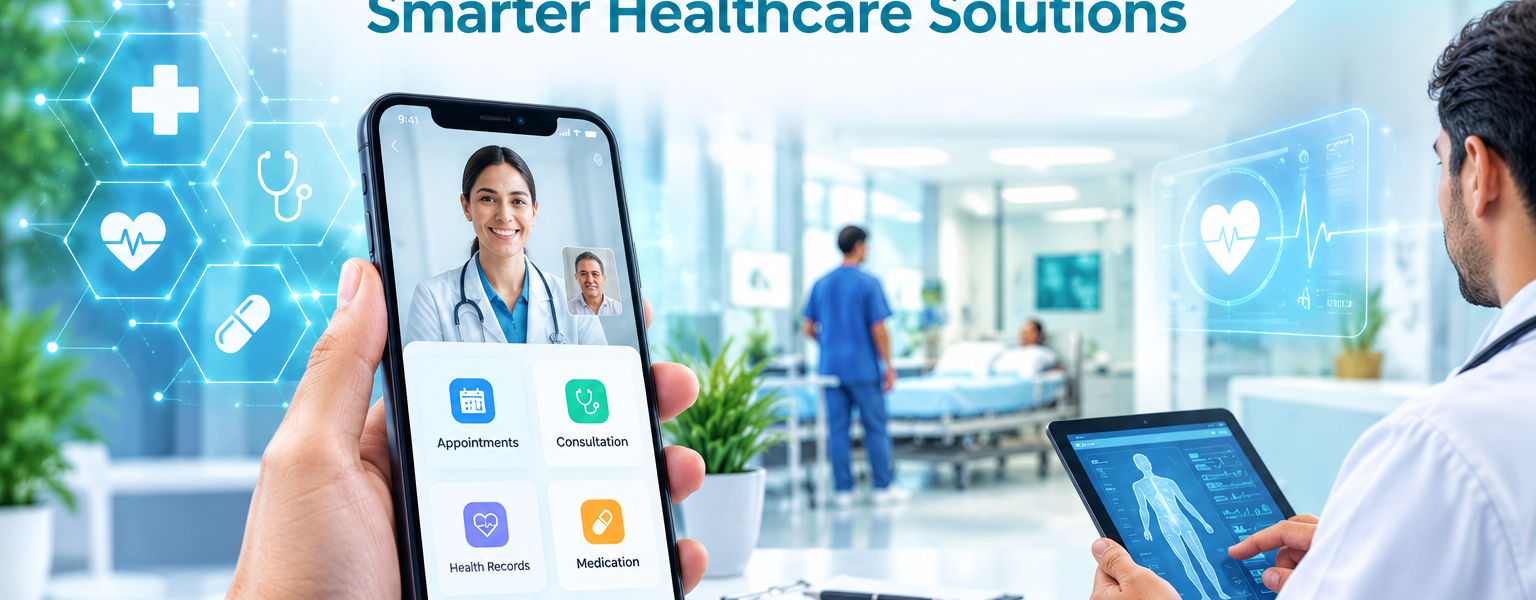
How Healthcare Mobile App Development Helps Build Smarter Healthcare Solutions?

The healthcare industry is rapidly adopting digital technologies to improve patient care, simplify medical processes, and make healthcare services more accessible. From online appointments to remote patient monitoring, mobile applications are helping healthcare providers deliver more convenient and efficient services. As patients increasingly expect quick access to medical information and personalized care, digital solutions have become an important part of modern healthcare.
Healthcare Mobile App Development enables hospitals, clinics, healthcare startups, and medical organizations to build applications that connect patients with healthcare professionals. These applications can support appointment scheduling, electronic health record access, medication reminders, telemedicine consultations, and other essential healthcare services.
With the right development strategy, businesses can use mobile technology to improve operational efficiency and create better patient experiences. Companies such as App Scoop help businesses explore innovative software solutions that support digital transformation and address evolving healthcare needs.
What is Healthcare Mobile App Development?
Healthcare Mobile App Development involves designing and building mobile applications for patients, doctors, hospitals, clinics, pharmacies, and other healthcare organizations. These applications are created to make medical services more accessible, improve communication, and simplify healthcare management.
Depending on business requirements, healthcare applications can serve different purposes, including patient engagement, remote consultations, medical record management, fitness tracking, and healthcare administration.
Common Types of Healthcare Mobile Applications
Several types of healthcare applications are used to address different medical and operational requirements.
- Telemedicine Applications: Enable patients to consult healthcare professionals through video calls, audio calls, and secure messaging.
- Appointment Booking Applications: Allow patients to schedule, reschedule, or cancel appointments without making phone calls.
- Electronic Health Record Applications: Help authorized users access and manage patient health information securely.
- Medication Reminder Applications: Send reminders for prescriptions, dosage schedules, and follow-up appointments.
- Remote Patient Monitoring Applications: Support the collection and review of health measurements from compatible connected devices.
- Healthcare Management Applications: Help hospitals and clinics coordinate appointments, staff activities, billing, and patient communication.
Selecting the appropriate application type depends on the intended users, clinical requirements, available resources, and business objectives.
How Healthcare Mobile App Development Builds Smarter Healthcare Solutions
Modern healthcare applications do more than move existing services onto mobile devices. They can connect different processes, reduce unnecessary manual work, and help healthcare organizations make better use of information.
1. Improving Access to Healthcare Services
Access to medical services can be challenging for people who live in remote areas, have busy schedules, or face mobility limitations. Mobile applications can reduce some of these barriers by providing digital access to healthcare resources.
Patients can search for doctors, book appointments, receive medical instructions, and participate in remote consultations through their smartphones. Depending on the service and local regulations, they may also receive prescriptions or follow-up recommendations electronically.
This approach can make healthcare more convenient while reducing the need for certain in-person visits. However, emergencies and conditions requiring physical examinations still need appropriate medical attention.
2. Simplifying Appointment Scheduling
Traditional appointment management often involves phone calls, manual records, and repeated communication between patients and administrative staff. These processes can create confusion and increase the risk of scheduling errors.
Healthcare mobile applications can provide a centralized appointment management system.
Features That Improve Appointment Management
- Real-time appointment availability
- Online booking and cancellation
- Automated appointment reminders
- Doctor profiles and consultation details
- Digital appointment history
- Follow-up scheduling options
These features help patients manage their visits more conveniently. Healthcare staff can also spend less time handling routine scheduling requests and more time supporting essential administrative and patient care activities.
3. Supporting Better Patient Engagement
Patient engagement is an important part of effective healthcare. Patients who understand their care instructions and remain connected with their healthcare providers may find it easier to manage ongoing treatment.
Mobile applications can encourage engagement through personalized notifications, educational resources, appointment reminders, and progress tracking.
For example, a patient managing a long-term condition may use an application to record relevant health measurements, review educational information, and receive reminders about scheduled checkups.
Healthcare providers can use appropriate communication features to share updates and help patients stay informed. Any medical recommendations or alerts should be designed with clinical oversight and should not replace professional diagnosis.
4. Enabling Telemedicine and Remote Consultations
Telemedicine has expanded the ways healthcare professionals can communicate with patients. Through mobile applications, patients can connect with doctors without always needing to travel to a healthcare facility.
A well-designed telemedicine application may include video consultations, secure messaging, appointment scheduling, digital document sharing, and payment integration.
These capabilities can be particularly useful for follow-up visits, routine consultations, and certain types of specialist care.
Healthcare organizations should also establish clear procedures for situations that require an in-person examination. Secure communication, reliable connectivity, and appropriate identity verification are essential for delivering dependable telemedicine services.
5. Improving Healthcare Data Management
Healthcare organizations generate large amounts of information, including patient histories, diagnostic reports, prescriptions, laboratory results, and appointment records. Managing this information across disconnected systems can be difficult.
Healthcare Mobile App Development can help create more organized access to relevant information by connecting mobile applications with authorized healthcare systems.
Benefits of Organized Healthcare Data
- Faster access to relevant patient information
- Reduced duplication of administrative records
- Improved coordination between authorized care teams
- Easier access to test results and medical documents
- More consistent communication across healthcare workflows
Integration with electronic health record systems and other medical platforms must be carefully planned. Data accuracy, access permissions, system compatibility, and secure information exchange should remain priorities throughout development.
6. Enhancing Medication and Treatment Management
Following a prescribed treatment plan can be challenging when patients have multiple medications, frequent appointments, or complex instructions.
Healthcare applications can make treatment management more convenient by offering medication reminders, prescription lists, refill notifications, and follow-up alerts.
For example, an application may remind a patient when a scheduled dose is due or when a prescription is approaching its refill date. Patients can also use tracking features to record whether they have followed their prescribed schedule.
These tools can support better organization, but medication schedules and treatment instructions should come from qualified healthcare professionals. Applications must avoid presenting automated reminders as a substitute for medical advice.
7. Using Artificial Intelligence for Smarter Healthcare Experiences
Artificial intelligence is creating new opportunities for healthcare applications. When implemented responsibly, AI-powered features can help users navigate services, organize information, and support selected administrative tasks.
Potential applications include healthcare chatbots, appointment assistance, document processing, medical information search, and summarization of appropriate clinical documentation.
Practical AI Use Cases in Healthcare Apps
Virtual assistance: AI-powered assistants can answer general service questions, explain how to use an application, and guide users through appointment booking.
Administrative automation: AI tools can help organize documents, categorize incoming requests, and reduce repetitive administrative work.
Personalized information: Applications can present relevant educational content based on user preferences and permitted information.
Clinical decision support: Specialized systems may assist qualified professionals by organizing information or highlighting patterns, provided they are appropriately validated and supervised.
AI features that influence clinical decisions require additional attention to accuracy, bias, transparency, privacy, and regulatory requirements. They should not independently make high-risk medical decisions without suitable safeguards and professional oversight.
Essential Features of a Successful Healthcare Mobile App
A successful healthcare application should be designed around user needs, operational requirements, and applicable healthcare standards. Adding too many features without a clear purpose can make an application difficult to use.
User-Friendly Interface
Patients may have different levels of digital literacy and accessibility needs. Clear navigation, readable text, accessible controls, and simple workflows help users complete tasks without unnecessary confusion.
Secure User Authentication
Healthcare applications should protect sensitive information through appropriate authentication methods, role-based access controls, and secure session management. Multi-factor authentication may be appropriate depending on the application and its risk profile.
Notifications and Reminders
Push notifications can inform users about appointments, prescription reminders, and relevant account updates. Notifications should avoid revealing sensitive medical details on a locked screen unless the user has explicitly chosen that behavior.
Integration With Healthcare Systems
Integration with hospital management platforms, electronic health records, laboratory systems, and payment services can improve workflow efficiency. Standards such as HL7 FHIR may support structured healthcare data exchange where applicable.
Reporting and Analytics
Dashboards can help healthcare administrators understand application usage, appointment patterns, and service performance. Analytics should use appropriate access controls and data minimization practices.
Security and Privacy in Healthcare Mobile App Development
Healthcare applications often process highly sensitive personal information. Security and privacy should therefore be considered from the earliest planning stages rather than added after development is complete.
Protecting Sensitive Patient Information
Developers should use appropriate encryption for data in transit and at rest, secure API communication, access controls, audit logging, and careful session management. Systems should also be tested for vulnerabilities before release and monitored after deployment.
Organizations must determine which legal and regulatory requirements apply to their markets and operations. Depending on the jurisdiction, these may include HIPAA requirements in the United States, GDPR obligations in the European Union, or India’s applicable Digital Personal Data Protection framework and healthcare-related rules.
Compliance depends on the actual service, organizational role, data processing activities, and applicable law. Simply adding security features does not automatically make an application compliant.
Maintaining Trust Through Transparency
Patients should understand what information an application collects, why it is collected, how it is used, and with whom it may be shared. Clear privacy notices, meaningful consent processes where required, and accessible data-management options can strengthen user confidence.
Healthcare organizations should also establish procedures for handling security incidents, responding to data requests, and managing information throughout its lifecycle.
The Role of App Scoop in Healthcare Digital Transformation
Choosing the right development partner can influence the usability, scalability, and long-term performance of a healthcare application. Businesses need a development approach that balances technical capabilities with real operational requirements.
App Scoop specializes in software development services, including mobile app development, web app development, AI automation, API integration, and intelligent data processing. These capabilities can be relevant to healthcare organizations planning digital products that connect users, systems, and information.
A structured development process generally begins with understanding the business model, identifying user needs, defining essential features, and evaluating technical and regulatory requirements.
Building Solutions Around Business Requirements
Healthcare businesses should identify the specific problems their applications need to solve. A clinic may prioritize appointment scheduling, while a telehealth startup may focus on secure video consultations and digital patient onboarding.
App Scoop can be considered by businesses exploring customized mobile application solutions that align with their service requirements and long-term objectives.
Planning for Scalability and Integration
Healthcare applications may need to support additional users, new services, or connections with third-party systems as the business grows. A modular architecture, well-designed APIs, and reliable infrastructure can help accommodate these changes.
Development teams should also plan for testing, ongoing maintenance, software updates, and performance monitoring to keep the application dependable over time.
Challenges in Healthcare Mobile App Development
Although mobile technology creates valuable opportunities, healthcare application development involves challenges that require careful planning.
Regulatory and Compliance Requirements
Healthcare rules vary by jurisdiction and application type. Businesses should identify applicable obligations early and involve qualified legal, privacy, and clinical experts when necessary.
Integration With Existing Systems
Older hospital platforms may use different data formats, authentication methods, and communication protocols. Integration testing and careful data mapping are essential to reduce inconsistencies.
User Adoption
An application may fail to deliver value if patients and healthcare professionals find it difficult to use. User research, accessibility testing, onboarding guidance, and feedback-driven improvements can support adoption.
Reliability and Performance
Healthcare services may depend on timely access to information. Developers should evaluate application performance, server capacity, backup processes, and recovery procedures to reduce service interruptions.
Future Trends in Healthcare Mobile App Development
Healthcare technology continues to evolve as mobile devices, connected equipment, and intelligent software become more capable.
Wearable Device Integration
Applications can connect with supported wearable devices to collect selected health measurements, helping users track activity, sleep, heart rate, and other available metrics. Clinical use requires careful consideration of device accuracy and the limitations of consumer-generated data.
Remote Patient Monitoring
Connected devices and mobile applications can support the transmission of health measurements to care teams. These systems may be useful for selected patients when supported by appropriate clinical workflows and monitoring protocols.
Personalized Digital Health Experiences
Healthcare applications may offer more relevant educational resources, reminders, and navigation based on user needs and permitted data. Personalization should remain transparent and respect privacy preferences.
Greater Healthcare System Interoperability
Improved data exchange between healthcare platforms can reduce information silos and support better coordination. Organizations will continue to need secure integrations, consistent data standards, and clear rules governing information access.
Conclusion
Healthcare Mobile App Development is helping healthcare organizations create smarter, more accessible, and more efficient digital services. From appointment scheduling and telemedicine to patient engagement, data management, and responsible AI integration, mobile applications can improve how patients and healthcare professionals interact.
Successful implementation requires more than technical development. Organizations must prioritize usability, security, privacy, interoperability, clinical oversight, and long-term maintenance.
By defining clear goals and choosing appropriate technologies, healthcare businesses can develop applications that address genuine user needs and support sustainable digital transformation. With its software development and integration capabilities, App Scoop is one option businesses can explore when planning customized healthcare technology solutions.
Frequently Asked Questions (FAQs)
Q1. What is Healthcare Mobile App Development?
Healthcare Mobile App Development is the process of creating mobile applications for patients, doctors, hospitals, clinics, and other healthcare organizations. These applications can support appointment booking, telemedicine, patient records, medication reminders, and healthcare management.
Q2. What are the main benefits of healthcare mobile applications?
Healthcare mobile applications can improve access to services, simplify appointment scheduling, support communication between patients and providers, organize health information, and make selected administrative processes more efficient.
Q3. Which features should a healthcare mobile app include?
Important features may include secure login, appointment scheduling, patient profiles, notifications, telemedicine, medical record access, and integration with relevant healthcare systems. The final feature set should depend on the application’s purpose and user requirements.
Q4. How can healthcare mobile apps protect patient information?
Healthcare applications can use encryption, secure authentication, access controls, audit logs, security testing, and transparent privacy practices. Businesses should also identify and comply with the privacy and healthcare regulations that apply to their operations.
Q5. How can App Scoop help businesses with healthcare app development?
App Scoop offers software development capabilities, including mobile app development, API integration, AI automation, and intelligent data processing. These services may help businesses plan and build customized digital solutions based on their healthcare workflows and project requirements.

